
Game of the Year 2025 and the 4th Annual 'Willies' Awards

I would like to formally announce that 2025 was the Year of the Indie Game because, good God, did the independent game dev community just absolutely clown on the AAA industry this year. Just going by game quality, stuff like Clair Obscur, Silksong, Hades 2 and Blue Prince blew many minds this year, while the AAA industry was too busy closing studios, cancelling games and being bought out by the Saudis.
Still, it was a pretty okay year, I guess. I got a Switch 2 and a 5070 Ti, so it’s not all bad, right? Shout out to the games I didn’t get to this year, including ARC Raiders, Ghost of Yotei, The Alters, Silent Hill f, Metal Gear Solid Delta: Snake Eater, The Hundred Line: Last Defense Academy, Mortal Kombat: Legacy Kollection, No Sleep For Kaname Date, Baby Steps and Dispatch.
Willies Awards
Best Game I Did Not Play
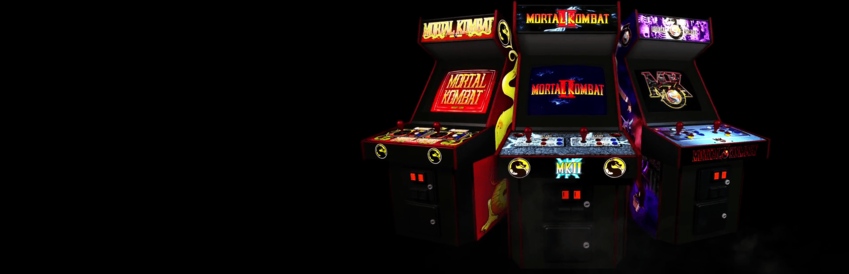
Mortal Kombat: Legacy Kollection
Atari and Digital Eclipse had stumbled upon a winning formula with their game compilation/documentary hybrid Atari 50: The Anniversary Collection. Even though I don't have that nostalgic love for the early output of Atari, it was still fascinating to see and, more importantly, play. As much as I think places like Noclip and People Make Games do excellent work with their documentaries, the work Digital Eclipse does is just on another level. Seeing development footage is one thing, but being able to play early pre-release builds of games is an entirely different experience, both as a fan and someone who believes preservation is important.
But Atari 50 was still about Atari, something I only had a mild interest in. Mortal Kombat, however, is something I have a major interest in, both as games and their development history. Detailed dives into the creation of Mortal Kombat, the controversies it faced, the messed-up home ports and whatever happened with Mortal Kombat 4—I wanted to know about it all.
But the thing keeping me from buying it was the games: it included nothing I haven't played before. I own the last Mortal Kombat Kollection on Steam. I've played all of these games already, and playing them again with online has little appeal to me. They unfortunately did not include any early builds, cancelled ports or even different revisions. The closest they get is the WaveNet version of Ultimate Mortal Kombat 3, which is just UMK3 with online functionality that no longer works. Not exactly the most exciting inclusion.
So, Mortal Kombat: Legacy Kollection remains on the shelf, but I assure you, dear reader, the moment this goes on a decent sale, I will be buying it.
Runners Up: ARC Raiders, Dispatch
Most Disappointing
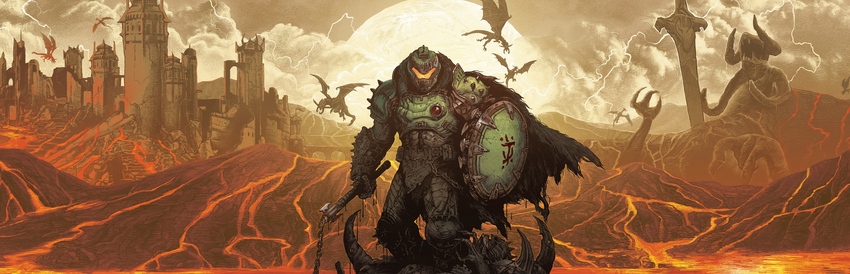
Doom: The Dark Ages
Doom: The Dark Ages just seemed like a bad idea from the start. When comparing it to the excellent Doom Eternal, it just seems like every decision they made was the wrong one. They made it a prequel, so nothing that happens in 2016 or Eternal is addressed. They switched themes from demonic sci-fi to gothic medieval, which makes everything look bland and dull. They changed their combat loop to have less focus on weapon switching and verticality, leaning entirely on their new blocking mechanic, which lacks Eternal’s dynamic flow. The weapons are completely interchangeable, the map layouts feel entirely flat both aesthetically and structurally, and for some baffling reason they decided to focus on the story. The last time id Software focused on the story of Doom it was Tom Hall, and he was fired over it—and with good reason. Even the mechanics they did include added nothing to the overall game. Dragon flying and mech battles were both completely needless and mechanically light.
In total, the game brings all of these missteps together to create something that was not fun, exciting, or engaging. Keep in mind, this is the follow-up to my personal Game of the Year for 2020. While Doom: The Dark Ages is still a technical achievement and a functional video game, id Software committed the greatest sin with The Dark Ages: they made Doom boring.
Runners Up: Lost Records: Bloom and Rage, Mario Kart World
Biggest Surprise
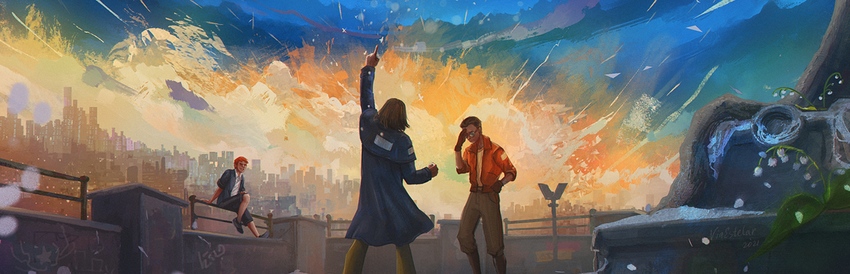
Disco Elysium (Mobile)
I am quite confident in saying that Disco Elysium is the greatest narrative-focused video game of all time. It's not just the absurdly excellent writing, memorable characters, extraordinary world-building or wonderful aesthetics, but the way the RPG elements strengthen the narrative so much that Disco Elysium could not have been done outside of games—except for the world's most elaborate 'choose your own adventure' book.
Unfortunately, recent times mean the focus of Disco Elysium is not on the game's qualities but the aftermath of its release: the implosion of ZA/UM, allegations of embezzlement and illegal corporate shenanigans, the five different spin-off projects—what should have been one of the most renowned debut studios has turned into a fractured mess.
There was little hope for what was left of ZA/UM, and their next project wasn't going to instil confidence with the public: a mobile port of Disco Elysium. One of the most narratively dense video games of all time coming to the platform you play Candy Crush Saga on. From the moment this was announced, people began mocking the idea: "Spend 1600 Disco Gems to get the Tequila Sunset Battle Pass." There was very little hope that the mobile port of Disco Elysium was going to be anything more than a low-effort cash-in.
But despite all that, ZA/UM actually put the time and effort into making this worthy of Disco Elysium and an excellent way for a more casual audience to engage with it. Every single moment in the game has a hand-drawn illustration—from the hanging corpse at the back of the Whirling-in-Rags to inspecting a defaced mailbox—all presented in the art style Disco Elysium is known for. Every lead has its own dedicated path that brings you directly to the relevant scene. No more walking back and forth. If you need to get the dumpster key from Garte, it just instantly takes you straight to him.
This structural change actually makes Disco Elysium feel more like a visual novel with chapters than an RPG. You can play as much as you want, or if you're on a bus and just want to squeeze in a 10-minute topic thread, the game allows you to do that—all while retaining the writing, characters and world-building that make it the best in its class. ZA/UM have made a version of Disco Elysium that I could recommend to my non-gaming friends. Even if you have played it before, it is worth it for the novelty. For a few months, this became my nightly ritual before bed.
I cannot say it is better than the original version, but I can say it utilises the strengths while losing none of what makes Disco Elysium special. Even I was shocked by how much I enjoyed Disco Elysium on my phone. Considering this game was more or less written off the moment it was announced, it was more than a little surprising it came out as well-made as it did.
Runners Up: Rematch, Abiotic Factor
Best Game That Did Not Technically Come Out This Year
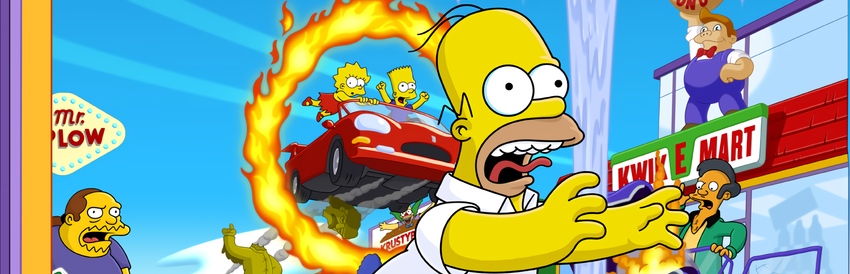
The Simpsons: Hit & Run
When I bought my Steam Deck last year, I was excited to be able to play modern PC games while lying down on my couch. However, the thing I was most excited about was revisiting older games via emulation. I've been able to play emulated games on my PC for years, but I've always hated playing console games at my desk. I yearn for my recliner.
My only options for living room emulation were either a dedicated PC in my living room—which was too much work to be worth it—or getting weird with it, like hooking up my phone via HDMI, which, while functional, wasn't exactly user-friendly. Enter the Steam Deck: a perfect trifecta of comfort, power and functionality to meet my needs. With programs like EmuDeck and EmulationStation, the setup was entirely painless—all I needed was an SD card full of ROMs and we were good to go.
So, after all that setup, what's the first game I play with my beautiful emulation system? The Simpsons... Road Rage. Yeah, I decided on Road Rage because I hadn't really played it since it was new and wanted to see if it held up. It... mostly does. The core of 'Crazy Taxi in Springfield' still works, but some of those missions are a pain, and it does get repetitive after a while.
After that, I played... the Futurama game, which sucks, by the way. Any game that starts off in a sewer level is not worth your time. However, after that came The Simpsons: Hit and Run, which is up there with GoldenEye and Chronicles of Riddick as one of the best licensed games ever made.
What Hit and Run excels at is the fusion between the IP and the GTA game design. This could have been a fully open world, but by creating segmented locations, it avoids the problem most open-world games of the era have—and that's space with nothing in it. In Hit and Run, around every corner is a famous Simpsons location or, at the very least, an amusing joke. Every area has its own distinct look and feel and is chock-full of references and gags that appeal to every level of fan.
It reminds me of the days when a small-ish group of people with a passion for what they were making could create something like this—instead of now, where every game has nine studios attached and is designed entirely around pleasing investors. The Simpsons: Hit and Run still works as a game, and if the popularity of the Simpsons season in Fortnite has told me anything, it's that a remaster of Hit and Run would do exceedingly well. Get to it, Disney!
Runners Up: Mass Effect 2, Ultima VII: The Black Gate
Best Character
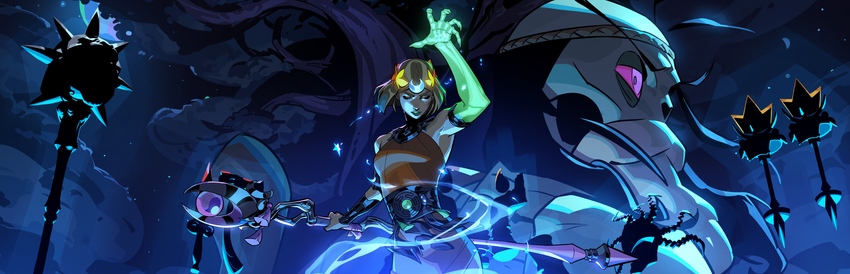
Melinoë (Hades 2)
Melinoë is one of those characters who isn't extraordinarily flamboyant or deeply complex. She feels like a real human character that everyone can relate to, which is funny to say considering she is the daughter of Greek gods. On the surface level, she seems to be a typical protagonist lady: an evil person wrongs her and her family, and she begins her journey to seek revenge. Not exactly winning any writing awards.
But what really drew me to Melinoë is her relationships with those on the outskirts of Hades 2: her poised respect for Hecate, her chumminess with Dora, her friendly-ish rivalry with Nemesis. Even her relationships with some villains like Scylla and Eris show another side of her that had not been seen before. All of these relationships are ones each of us has had at one time or another.
When you have a character like Nathan Drake, who basically has the same quippy relationship with practically every character he interacts with, it's nice to see a character have these different relationships with different people and still feel real enough to be engaging. That's the biggest difference between Melinoë and most other game characters: she is a character. She is not a loudspeaker for the writers to spew one-liners or expository dialogue.
How she engages with her allies and enemies, and how those relationships change, is the core driver for me in playing Hades 2 to the true ending. A character like that does not come around very often.
Runners Up: Dollman (Death Stranding 2: On the Beach), Sherma (Hollow Knight: Silksong)
Best Music
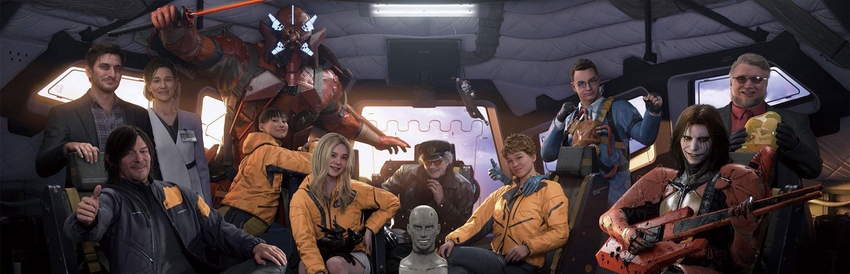
Death Stranding 2: On the Beach
Many franchises over the years are synonymous with incredible music: Zelda, Final Fantasy, Persona. But they are often used merely as something in the background. The battle music is played over battles, the overworld music is played during the overworld. Many games have great music, but few games have truly great use of music, and to me no one is better at implementing music than Hideo Kojima. Many of his most famous moments throughout his career include perfectly timed music cues: the ladder in Snake Eater, the intro to Phantom Pain, and the final delivery in Death Stranding. All of these moments would not have been as effective if not for the specific use of the music. Death Stranding 2: On the Beach might be his best work yet.
Despite the camera and positioning always being controlled by the player during gameplay, Kojima always seems to find the perfect time to play the perfect song right as you're about to clear a hill. From the majestic violins of To the Wilder to Troy Baker's haunting rendition of BB's Theme, all of the music in Death Stranding 2 is not only of excellent quality but is used in perfect harmony with the game itself. This harmony is best experienced in the opening of the game. As Sam and Lou begin their perilous trip home across a rugged mountain range, the hypnotic chant of Woodkid's Minus Sixty-One begins to play. The song isn’t just playing over the top of the game—it dynamically changes depending on the player's actions. Going slow, going fast, going up, going down, standing still, or soothing Lou—all of it changes the song to perfectly match the pace the player is going.
Death Stranding 2: On the Beach proves that you can have excellent music, but the key is how you use the music, and no game did it better this year.
Runners up: Hades 2, Hollow Knight: Silksong
Best Additional Content
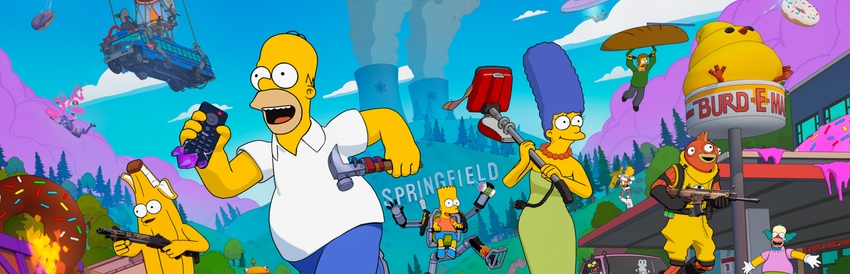
Fortnite - Chapter Six, Season Five
You can always tell something has been made with love and passion when even the littlest details are done with attention and care. Nothing has given me the feeling of people’s passion for something more than Fortnite’s best season ever: Chapter Six, Season Five—or The Simpsons Season.
For the entire month of November, Fortnite’s island became America’s crud bucket of Springfield, home of the Simpsons. Fortnite has done many, many different character crossover events before—from Star Wars to Marvel to, uh… Star Wars again—but with many of those, they felt like corporate tie-ins that a bunch of suits made in a boardroom somewhere. The Simpsons season was clearly made by people who absolutely love The Simpsons, and it shows in nearly every aspect of it.
The Springfield map is crammed full of big and small details. You have your hallmark locations like the Simpsons’ house, the Power Plant and Moe’s Tavern, but they went above and beyond to get even the little details down: the barrels of Krusty Imitation Gruel at Camp Krusty, the pig hoof prints on the ceiling of the Simpsons’ living room, and the accurate photos of banned people in the Android’s Dungeon. These little details are things only hardcore fans would put into the world—and they are everywhere in Springfield. You could spend hours going around looking at all these little details and still miss some.
This love and care extend to the characters as well. Sure, you’ve got the whole Simpsons family, but you also have skins like Moe, Flanders, Krusty and the most inspired choice: Scratchy. The obsessiveness doesn’t just stop at the character selection. Marge’s harvesting tool is the vacuum cleaner from the arcade game; Flanders has his stupid sexy skiing suit as an alternative style; Lisa’s back bling comes with a Malibu Stacy doll. Everywhere you look in this season is just dripping with Simpsons references from people who actually care—and as someone who loves The Simpsons, it was an amazing experience.
Even the gameplay was improved. The smaller map meant games were over faster and allowed players to traverse the map more quickly. This season was so good it made me believe that a new Simpsons game could be made today. The only negative I have for this is that the event is over and all that hard work and passion can no longer be seen. I know licensing can be a bit iffy with these sorts of things, but I implore Epic to find a way to allow stuff like this to be playable—or at least accessible—in the future.
Runners Up: Fortnite - Daft Punk Experience, World of Warcraft: The War Within - Player Housing

Best 'Video Game Related Thing That's Not Actually A Video Game’
Video Game History Foundation’s Library
Preservation and history are important—not just in an academic sense but culturally as well. The video game industry is quite young compared to music or film, making it much easier to track sources, contexts, and origins. This is why it’s paramount that all of video games and the media surrounding them are preserved, catalogued, and easily accessible. That is exactly what the Video Game History Foundation has done with its newly released magazine archive.
Thousands of issues across numerous publications over decades are included—everything from obscure computer magazines from the early 80s to contemporary-ish publications like GamePro. All of them are scanned at high quality, uncensored, text-searchable, and freely accessible to everyone. Yes, you can use it for academic purposes. When this was first released, I decided to see if I could find any reviews of the abhorrent Atari 2600 game Custer's Revenge from the year it was released. Not only did I find some, I even found one written by a woman, and it was a fascinating read (she did not like it, by the way, if you wanted to know).
It is an incredible resource of academic knowledge, but to me its true value lies in reading about all the weird games and crazy advertisements that litter video game magazines. Did you know the band Journey released a video game? I know this because I came across this advertisement while browsing a magazine on this service. The amount of blood, sweat, and tears that the Video Game History Foundation put into this must have been immense, but this resource is not only a benefit for those researching history or tracking down sources—it’s also for weirdos like me who love looking at this stuff.
This is something that will benefit everyone who loves video games.
Runners Up: Action Button Pictures Presents ‘Los Angeles Noire’, honestorm23’s Ranking of Simpsons Games

The Unity Lifetime Achievement Award for Most Baffling Decision
WB Killing Monolith
The winner for this award is usually just one singular decision by a game company being giant dingbats. However, this year the award is being presented to a company that has made baffling decision after baffling decision, culminating in the closure of a studio with a 30-year history and multiple Game of the Year awards: Monolith Productions.
Warner Bros. purchased Monolith in 2004, shortly before they released F.E.A.R. and Condemned. The studio was well known for making excellent first-person shooters like Blood and No One Lives Forever, so in WB's infinite wisdom, they decided to put Monolith on a Middle-earth MOBA. Naturally, the game was a failure, so WB decided the best way for Monolith to bounce back was to make another Middle-earth game—but this time a single-player, melee-focused action game similar to the Batman: Arkham games.
However, despite everything that was stacked against them, Middle-earth: Shadow of Mordor became a critical and commercial success, gaining millions of sales and winning numerous Game of the Year awards, including at The Keighleys. It was so good that WB patented its Nemesis system so that no one else but them could use it. Naturally, they greenlit a sequel, but instead of focusing on expanding the Nemesis system or better utilising the Tolkien lore, they instead focused on extracting as much money out of people as possible.
Middle-earth: Shadow of War is absolutely lousy with microtransactions, and for an entirely single-player game, this is completely inexcusable. They knew they messed up because a year later, they completely ripped out all microtransactions from the game. While Shadow of War reviewed well and sold decently, it was still seen as the lesser of the two games. Monolith hit a stumbling block thanks to WB's ineptitude, but Monolith still had a winning formula with their Nemesis system and had shown they could make a game that reviewed well and sold well. All they needed was an original idea or a well-suited IP from WB's enormous library, and they could have had another GOTY winner on their hands.
Now, I don't know if Monolith or WB were the ones who decided on Wonder Woman, but they clearly had no idea what they were doing. Gun to my head, I could not name you one single Wonder Woman villain, yet somehow Monolith was going to have to make dozens of them to fit their Nemesis system. Think of all the IPs in WB’s library they could have used for this: Game of Thrones, Mortal Kombat, TMNT—imagine a Terminator game where you played as a Terminator killing off the Resistance using the Nemesis system. But instead, they saddled a great idea with an IP that never would have worked.
No offence to Wonder Woman, but did you see Wonder Woman 1984? You didn’t, because no one did. So instead of making an original game or pairing the Nemesis system with an IP that suited it, they tried to make gold out of rocks—and it was too much for the studio, as WB closed them and a few others down with nothing to show for it. Monolith Productions went from winning Game of the Year to dead in just over ten years.
Congratulations to Warner Bros. for closing down one of the most decorated and talented studios for a game that was never going to work.
Runners Up: Nintendo Charging for GameChat, Persona 4 Revival’s Reveal Trailer

Best Mind Distractor While The World Burns Around Me
Skate.
Skate has gotten a lot of criticism from the general public at launch—and some of it for good reason. There is no good justification for being always online. The microtransactions are both overpriced and incredibly dull, and it features what I might think is the worst voice acting I have heard in quite a while. Having your AI assistant character sound robotic and lifeless might be good for that specific character, but it doesn’t fit well with the rest of the presumably human cast.
So why do I keep coming back to it time and time again? It’s actually quite simple: it allows me to skate.
Skating is an interesting sport because, unlike most sports where the focus is entirely on the execution of the plays, skateboarding is a combination of execution, creativity and exploration. You need to find a location, figure out a way to skate that location and execute it as best you can.
During the beta, I found this giant Brachiosaurus statue and thought to myself: I wonder if I could grind down its back from head to tail. So for about two hours, I tried over and over again, smashing my head on the ground or falling off the sides, but after persevering, I managed to nail it. Unfortunately, this was during the beta, so the gameplay had watermarks all over it—but I did it. After that, I went on trying to find another spot.
That is what I love about Skate: you choose how you want to play. If you want to hit all the objectives and get the highest scores possible, you can do that. If you want to gather your friends and do a bunch of wacky stunts, you can do that. If you want to cruise around and just create your own lines at a chill pace, you can do that.
To me, it is the perfect game to zone out, relax and forget about the world. It’s just you, your board and a city-sized playground to go through at whatever speed you want. Very few games allow you to do that, but Skate is one of them—and it will be my chill-out game for as long as EA keeps the servers up… which, based on recent news, is probably not long.
Runners Up: Battlefield 6, Death Stranding 2: On the Beach

Most Anticipated Game of 2026 (Not Called Grand Theft Auto VI)
Fire Emblem: Fortune's Weave
This award was won by Grand Theft Auto VI last year, and with it being delayed to 2026 it would just win again this year—and since writing about the same game again is boring, it has been disqualified.
I normally don’t get emotionally invested in video games. Yes, I feel the general emotions of joy, sadness, anger, etc., but most times it's pretty mild. The ending of Metal Gear Solid 3: Snake Eater made me sad, and the return of Nanako in Persona 4 made me happy, but never has a game truly gotten to me on that level. Until I played Fire Emblem: Three Houses, specifically the Black Eagles route.
For the last eight years I have been studying and eventually became a real-life, honest-to-God teacher. It wasn’t something that was really a dream of mine, but at the behest of my family I decided to attend university to become a teacher—and fell in love with the profession. It’s pretty incredible to see the growth of young people over time, academically, socially and emotionally.
I wasn’t really interested in Three Houses for the teacher mechanics but more so the tactics. I do love a good weapon triangle. Honestly, it didn’t really hit me in the first half of the game. It had some fun, lovable characters and best-in-class turn-based battles. But then it happened. Halfway through the Black Eagles campaign the whole world is ripped apart and you spend the rest of the game fighting—and eventually killing—your fellow teachers and former students, and it just fucking got me, hard.
It made me think of how I would act in those scenarios with my real-life students, and it just got me all emotionally twisted. To this day I still can’t listen to 'Unfulfilled' without feeling a combination of sadness and anger. No other game had done that to me before, and no other game has done that to me since.
Fast forward six years and a pretty-good-but-not-as-good instalment later, I’m watching the Nintendo Direct where they announce Fire Emblem: Fortune’s Weave—and it looks great. It has that grounded but still anime look, and the tactics look stellar as usual, but right at the very end… Sothis!?! Wait, this takes place in Fódlan?! It went from a “Yeah, I’ll play that at some point” to me buying a Switch 2 that week.
I’m not delusional in thinking it’s going to hit me the same way that Three Houses did—that was a very specific place and time. But that world was so layered and detailed that a sequel/prequel/whatever this is, is something I desperately want to know about. Fire Emblem: Fortune’s Weave made me buy a console. You cannot get any more hyped than that.
Runners Up: Resident Evil Requiem, 007 First Light
Game of the Year 2025
10. Rematch
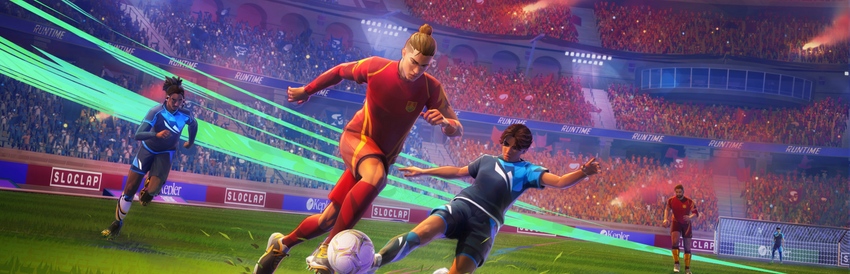
More sports games need to be more like Rematch. Having to play as a team is so much more engaging and fun than playing as an entire team by yourself. I know it's a bit reductive to say, “This is just Rocket League but actual soccer”, but that really is the best way to describe it. Having individual players means you can devise strategies and execute plays like an actual sports team. It makes it all the more satisfying when you make the crucial save or execute that perfect pass. But the developers were smart enough to make adjustments to the rules of soccer to make it flow better, like enclosing the playing field or automatically assigning the goalie. I hope Rematch starts a trend of individualised sports games.
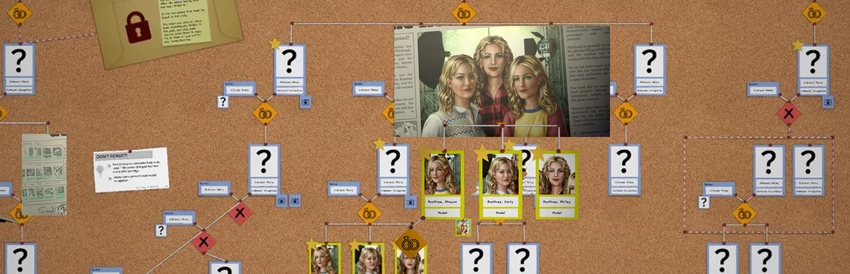
9. The Roottrees Are Dead
The Roottrees Are Dead is just a delightful little mystery game to spend an afternoon with a coffee. It has a great gimmick of using an antiquated search engine from the ’90s to find information. What’s so great about The Roottrees Are Dead is that it goes for this mellow, slower pace with lower stakes than your typical mystery. You’re not solving a horrific murder; you’re figuring out a family tree. You aren’t under a time limit but under the limitations of old technology. Sure, that can get a little frustrating sometimes, but thanks to its excellent notes system and hints, those moments are few and far between. If you want a mystery game that is low stakes and just a little bit quirky, I cannot recommend The Roottrees Are Dead enough.
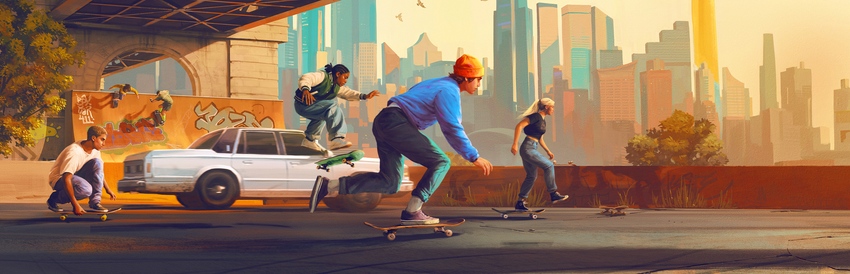
8. Skate.
Skate is exactly what I wanted from a Skate game. They nailed the controls and feel of going around on your board, flicking the thumbstick perfectly. They gave me a big, bright, colourful world to explore and destroy my way through. They gave me just enough missions and activities so there is always something to do. They even gave me a PC version! Sure, there are a lot of things I would change about Skate and the stuff around it, but I play Skate games to just go out and skate—and EA gave me exactly that. They got the important fundamentals of Skate, and that alone means I’m going to be enjoying this for years to come… hopefully.
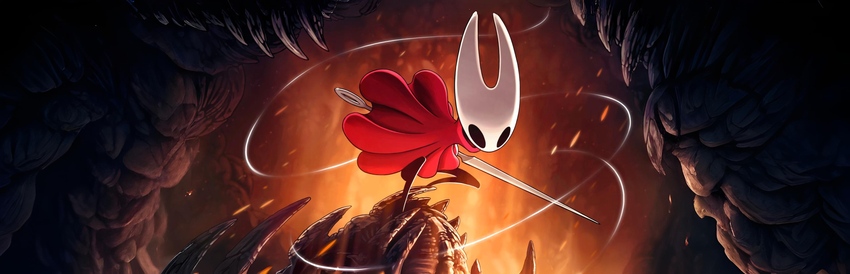
7. Hollow Knight: Silksong
It may have been overly difficult. It may have been designed maliciously. It may have made me want to break my controller. But even after all that, I can still see the level of polish and craftsmanship Team Cherry put into Hollow Knight: Silksong. Every part of the game is expertly made with a scary amount of talent—from the absolutely gorgeous 2D art, the beautifully haunting soundtrack, the brutal but fair-ish boss encounters, and even the little vocal noises the NPCs make. All of this made the eight years of waiting for Hollow Knight: Silksong worth it.
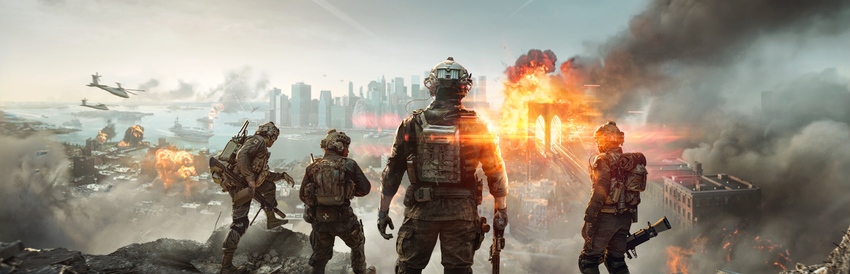
6. Battlefield 6
Sometimes all you need to do is just make something well-made and basic in order to get the job done—and that’s exactly what Battlefield 6 has done. Yes, the single-player campaign was eight hours of wasted time and the Battle Royale mode is beyond boring, but that Battlefield multiplayer experience is all intact and ready to go. No silly sci-fi nonsense or character abilities. Just four roles, a huge map and a ton of explosions is all you need to make a great Battlefield game—and thankfully EA was able to deliver the best multiplayer experience this year.
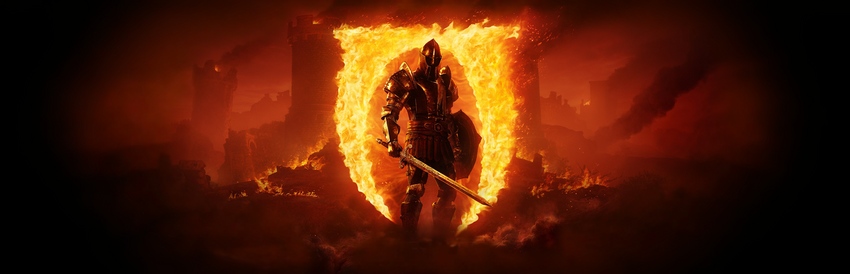
5. The Elder Scrolls IV: Oblivion Remastered
It must have been an incredible balancing act for Virtuos when remaking Oblivion. They had to remake a game that was notoriously janky for a modern audience while also keeping that charm and spirit of Oblivion intact—and for the most part, I think they pulled it off. The environments look downright gorgeous while keeping the generic fantasy mood, but you still have those delightfully awkward face-to-face conversations. Combat feels better with smoother animations but still can be broken over your knee with some creative enchants and spellcrafting. I don’t think this kind of “fresh paint over a collapsing house” remaster could work with any other game other than Oblivion, but they made it—and I am so much happier because of it. The Elder Scrolls IV: Oblivion Remastered is a perfect remake exactly for The Elder Scrolls IV: Oblivion.
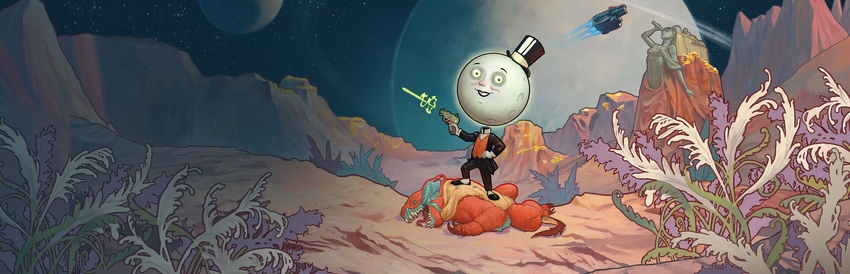
4. The Outer Worlds 2
The main faction quest at the very end of the game had bugged out to the point where I could not finish it—and as of writing, still hasn’t been fixed—yet I would still call The Outer Worlds 2 one of the best games of the year. Obsidian has once again proved that they can still make excellent RPGs that actually feel like an RPG and not just a shooter with dialogue choices. Every problem always has multiple solutions that can be solved by either character stats or player intuition. Gun and sword combat feels miles better than the original. The perk and flaw system always makes any encounter wild and unpredictable, and it gives us that quirky Obsidian characters and dialogue that always make their games feel like a blast to experience—all while cutting out unnecessary fluff that’s typically found in these kinds of games. The Outer Worlds 2 continues to prove that Obsidian is still Microsoft’s best studio.
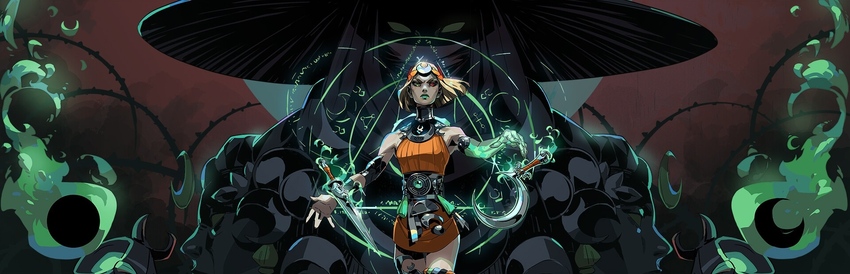
3. Hades 2
Hades 2 did not really feel necessary when it was announced, but after playing it, it made Hades 1 feel like a prologue. When you play a Supergiant game you expect excellent art and great characters, but they still went beyond what they needed to to make a Hades sequel. New abilities, new upgrades, a second path to fight your way through, more home base activities, a wider range of enemies, more secrets—Hades 2 was so good it almost made Hades 1 completely redundant. And may I remind you that Hades 1 was also excellent, but Hades 2 is just so much better in every measurable way. It is Supergiant’s best game—and considering the pedigree they have, that is quite the accomplishment.
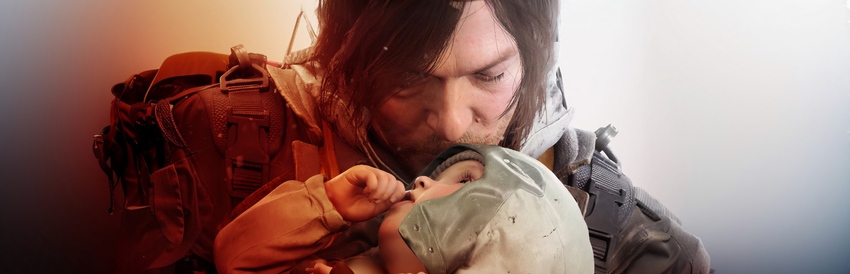
2. Death Stranding 2: On the Beach
Death Stranding 2: On the Beach might be in contention for the most improved sequel of all time. Every problem I had with the original Death Stranding is solved or removed from On the Beach. A lack of different environments? Here’s everything from a sandy desert to a lush rainforest to a snowy peak. Combat feels basic and unneeded? We’re going to give you numerous kinds of enemies with various different tools to use. The story disjointed and confusing? We’re going to keep all the characters with you in one place for a proper ensemble. Death Stranding 2: On the Beach took what was done with Death Stranding 1 and improved and expanded on everything. It feels like the game Hideo Kojima wanted to make without compromise.
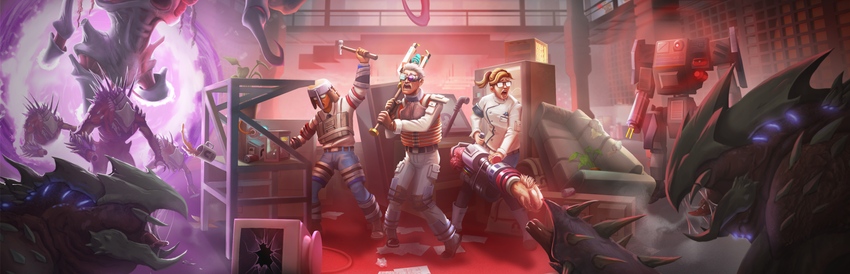
1. Abiotic Factor
All you need is one good idea to make an incredible game. Just one good idea. You can have a fancy engine, thousands of developers and a bottomless pit of a budget, but if you don’t have that one good idea, it will be for nothing. The proof of this phenomenon is Abiotic Factor, because with just one good idea, not only did they make an incredible game—they made the best game this year.
There are a few genres and types of games that I just feel I am 100% done with, that I want nothing to do with. Stuff like battle royales, collect-a-thon open worlds, deck-building roguelikes—just stuff I do not want to play under any circumstances. One of those games is survival crafting games similar to Minecraft, Rust and The Forest. I never ever want to smack a tree with my fist to collect wood ever again.
I actually started playing Abiotic Factor not knowing it was a survival game—I thought it was some sort of indie version of Prey (2017), but I was wrong. It was a survival crafting game inside a Black Mesa-style laboratory. That was the one good idea that made Abiotic Factor work. Yes, you’re still collecting wood—but not from generic-looking trees, but from random office furniture. You collect water not from finding rivers but from finding bathrooms and sinks. Instead of hunting wolves and zombies, you’re hunting SCP-style monsters. Instead of establishing a base inside a wood shack, you’re establishing your base in a broom closet or someone’s office.
That one change of location made everything in Abiotic Factor feel new and fresh. The combination of a novel environment paired with the handcrafted level design made this survival crafting metroidvania-style game go from something I wouldn’t even touch to my personal Game of the Year.